Personalised Care for Your Health

Circumcision Specialist Singapore

Circumcision is a commonly performed urological procedure, undertaken for medical, religious, or personal reasons. Understanding its indications, benefits, and recovery process is key to making an informed decision. Dr Tan Teck Wei provides comprehensive circumcision services using modern techniques that prioritise patient comfort, safety, and positive outcomes. Of note, Dr Tan only treats patients above the age of 10 years old. Younger patients should consult a paediatric surgeon instead.

doctor img
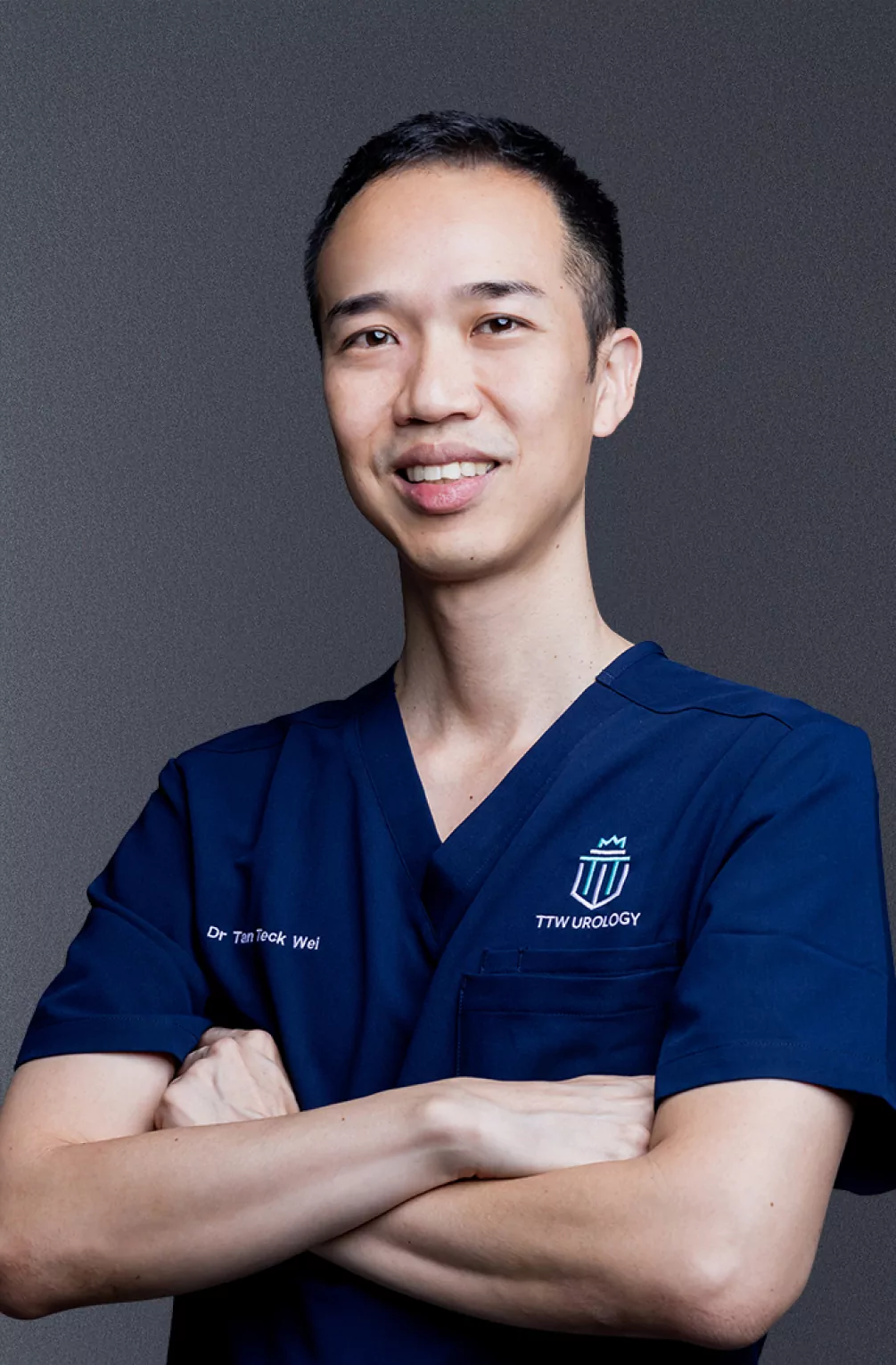
Dr Tan Teck Wei

MBBS|DFD (CAW)|MRCS|MMed (Surgery)|FAMS (Urology)

1 Circumcision Specialist Singapore

What is Circumcision?

Circumcision is a surgical procedure that involves the removal of the foreskin (prepuce), which is the retractable fold of skin covering the head (glans) of the penis. This procedure has been performed for thousands of years across various cultures. In Singapore, circumcision is commonly performed for religious, cultural, medical, and personal reasons. 

The procedure can be performed at any age, from newborns to adults, though the techniques and considerations may vary depending on the patient’s age and specific circumstances.

Medical Indications for Circumcision

  • Phimosis

    Phimosis occurs when the foreskin cannot be fully retracted over the glans penis. While this is normal in young children, persistent phimosis in older children and adults can cause discomfort, difficulty with hygiene, and increased risk of infections. In severe cases, phimosis can interfere with urination and sexual function.

  • Paraphimosis

    This is a medical emergency where the retracted foreskin becomes trapped behind the glans and cannot be returned to its normal position. This condition can cause severe swelling, pain, and restricted blood flow to the glans, requiring immediate medical attention.

  • Recurrent Balanitis

    Balanitis refers to inflammation of the glans penis, often accompanied by inflammation of the foreskin (balanoposthitis). When these infections occur repeatedly despite proper hygiene and medical treatment, circumcision may be recommended to prevent further episodes.

  • Foreskin Adhesions and Scarring

    Chronic inflammation, infections, or injuries can lead to scarring and adhesions between the foreskin and glans. These conditions can cause pain, difficulty with retraction, and hygiene challenges that may necessitate circumcision.

Non-Medical Reasons for Circumcision

  • Religious and Cultural Practices

    Many families choose circumcision as part of their religious or cultural traditions. In Singapore’s multicultural society, circumcision is commonly practised among Muslim and Jewish communities, as well as some Christian denominations.

  • Personal Preference

    Some individuals opt for circumcision based on personal preference, aesthetic reasons, or perceived hygiene benefits. Adult circumcision for personal reasons requires careful consideration and thorough discussion with a qualified urologist.

  • Preventive Health Considerations

    Research has shown that circumcision may reduce the risk of certain conditions, including urinary tract infections in infancy, some sexually transmitted infections, and penile cancer. These preventive benefits should be discussed with a medical professional to understand their relevance to individual circumstances.

Considering circumcision for yourself or your child?

Consult with Dr Tan Teck Wei for professional assessment and personalised recommendations.

Circumcision Techniques

  • Conventional Surgical Circumcision

    This traditional method involves using a scalpel to remove the foreskin, followed by careful suturing to promote healing. This technique allows for precise control and is suitable for patients of all ages, particularly when there are anatomical variations or medical conditions affecting the foreskin.

  • Plastibell Circumcision

    Commonly used for infants and young children, this method involves placing a plastic ring between the foreskin and glans. The foreskin is tied over the ring, cutting off its blood supply. The foreskin and ring typically fall off naturally within 7-10 days.

  • Gomco Clamp Method

    This technique uses a specialised clamp to protect the glans while the foreskin is removed. The clamp provides haemostasis (bleeding control) during the procedure, making it a popular choice for infant circumcisions.

  • Laser Circumcision

    Modern laser technology can be used to perform circumcision with minimal bleeding and potentially faster healing times. The laser cauterises as it cuts, reducing the need for sutures in some cases.

  • Stapler Circumcision

    This newer technique uses a specialised device that simultaneously cuts and staples the wound edges. This method can be quicker than traditional surgery.

Pre-Procedure Preparation

  • Initial Consultation

    Your first appointment will involve a comprehensive evaluation by Dr Tan. This includes discussing your reasons for seeking circumcision and medical history review. For children and adolescents, parents or guardians will be involved in all discussions and decision-making.

  • Physical Examination

    A thorough physical examination will be conducted to assess the medical necessity or suitability for circumcision, and to plan the optimal surgical approach.

  • Pre-Operative Instructions

    You will receive specific instructions about fasting requirements, medications to avoid, and hygiene preparation. 

The Circumcision Procedure

  • Anaesthesia Options

    The choice of anaesthesia depends on the patient’s age and the specific technique being used. Options include:

    • Local anaesthesia with numbing injections
    • General anaesthesia or sedation
  • Procedure Duration

    Most circumcision procedures take between 20 to 60 minutes, depending on the technique used and individual anatomy. The actual surgical time is often shorter, with additional time needed for preparation and immediate post-procedure care.

  • Immediate Post-Procedure Care

    After the procedure, the surgical site is dressed with protective gauze. Patients are monitored briefly before discharge, and detailed aftercare instructions are provided to ensure proper healing.

Every patient’s situation is unique.

Dr Tan Teck Wei will assess your specific circumstances and recommend the most suitable circumcision technique for you.

Recovery and Aftercare

  • First Week Post-Procedure

    The initial healing phase requires careful attention to hygiene and wound care. Pain is typically mild to moderate and well-controlled with prescribed medications. Swelling and bruising are normal and should gradually improve. The surgical dressing may need to be changed according to your surgeon’s instructions.

  • Activity Restrictions

    Most patients can return to work or school within 2-3 days for desk-based activities. Strenuous physical activities, sports, and heavy lifting should be avoided for 2-4 weeks. Adult patients should abstain from sexual activity for 4-6 weeks or as directed by their urologist.

  • Wound Care Instructions

    Keeping the surgical site clean and dry is crucial for proper healing. Specific instructions will be provided for bathing, dressing changes, and applying prescribed ointments. 

    Follow-Up Appointments

    Scheduled follow-up visits allow Dr Tan to monitor healing progress and address any concerns. The timing of these appointments varies based on the procedure type and individual healing response.

Potential Risks and Complications

While circumcision is generally a safe procedure with a low complication rate, understanding potential risks is important:

  • Immediate Complications

    Bleeding is the most common immediate concern, though significant bleeding is rare. Infection risk is minimised through sterile technique and proper aftercare. Adverse reactions to anaesthesia, while uncommon, are carefully monitored and managed.

  • Long-Term Considerations

    Inadequate foreskin removal may occasionally require revision surgery. Excessive skin removal is rare but can cause discomfort with erections. Scarring typically fades over time but may be more prominent in some individuals. Changes in penile sensitivity are often temporary and stabilise over time.

  • When to Seek Medical Attention

    Contact Dr Tan immediately if you experience excessive bleeding, signs of infection (increasing redness, warmth, pus discharge), difficulty urinating, or fever above 38.5°C. Severe pain not controlled by prescribed medications also warrants medical evaluation.

Dr Tan Scrubs Photo

Dr Tan Teck Wei

MBBS (S’pore)

DFD (CAW)

MRCS (Edin)

MMed (Surgery)

FAMS (Urology)

Dr Tan Teck Wei is a Senior Consultant Urologist in Singapore who specialises in the management of complex urological cancers, including those affecting the kidneys, prostate, and bladder.

He is fellowship-trained in open, laparoscopic and robotic surgery. He also specialises in the management of other urological conditions including:

  • Prostate Enlargement
  • Recurrent Urinary Tract Infections
  • Stones

To date, Dr Tan Teck Wei has been involved in more than 500 robot-assisted surgeries, building up his volume of cases from his fellowship training days and cementing his expertise in robotic surgery.

Dr Tan Teck Wei believes in the holistic management of his patients, and seeks to journey with them from diagnosis to cure.  Dr Tan is effectively bilingual in English and Mandarin, making him a popular choice with the young and old, as well as international patients.

Dr Tan Teck Wei possesses a wealth of specialist experience in the field of Urology. He has previously held positions as a Consultant Urologist and Director of Genitourinary Oncology at Tan Tock Seng Hospital.

Dr Tan’s expertise in conducting MRI-targeted Prostate Biopsies led to his advisory role with the Ministry of Health’s Agency for Care Effectiveness. Furthermore, he has served as an Adjunct Assistant Professor and Clinical Teacher at the National University of Singapore (NUS) Yong Loo Lin School of Medicine and the Nanyang Technological University-Imperial College London’s Lee Kong Chian School of Medicine respectively.

He has actively participated in humanitarian initiatives as a member of the Singapore Navy surgical team, collaborating with the Indonesian Navy to provide healthcare services to the communities in Padang and Ambon. It is his passion to improve the standards of healthcare to patients both in Singapore and overseas.

  • Former Consultant Urologist and Director of Genitourinary Oncology, Tan Tock Seng Hospital
  • Adjunct Assistant Professor, National University of Singapore (NUS) Yong Loo Lin School of Medicine
  • Clinical Teacher, Nanyang Technological University-Imperial College London’s Lee Kong Chian School of Medicine
  • Advisor, Ministry of Health’s Agency for Care Effectiveness
  • Surgical Team, Singapore Navy

Take the First Step Towards Informed Decision-Making

Considering circumcision requires thoughtful evaluation and professional medical advice. Dr Tan Teck Wei has considerable experience performing circumcisions for patients of all ages, using current techniques and safety protocols.

Billing & Insurance

Corporate & Personal Insurance Plans

For Singaporeans, Singapore Permanent Residents and Foreigners.
Please speak to our friendly clinic staff about using your insurance plans.

Make an Enquiry

For urgent or same day appointment requests,
please call our hotline at +65‎ 6518‎ 3622.

    Full Name*

    Email Address*

    Phone Number*

    Your Message*

    For Faster Response, WhatsApp us!

    +65 8090 3075


    ask us anything

    Frequently Asked Questions

    At what age is circumcision typically performed?

    Circumcision can be performed at any age, from newborn to elderly adults. In Singapore, religious circumcisions often occur in infancy or early childhood, while medical circumcisions are performed when indicated. Each age has different considerations for procedure type, anaesthesia, and recovery. Dr Tan will discuss the optimal timing based on your specific circumstances.

    How painful is the circumcision procedure and recovery?

    During the procedure, appropriate anaesthesia ensures patients experience minimal to no pain. Post-procedure discomfort is typically mild to moderate and well-managed with prescribed pain medications. Most patients report that the anticipation is worse than the actual experience.

    Will circumcision affect sexual function or sensitivity?

    Medical research shows that circumcision does not adversely affect sexual function, satisfaction, or sensitivity in the long term. Some men report temporary changes in sensation immediately after the procedure, which typically normalise within a few months as the glans adapts. Most men who undergo adult circumcision report no negative impact on their sexual experiences.

    How much does circumcision cost in Singapore?

    The cost of circumcision varies depending on factors such as the patient’s age, chosen technique, type of anaesthesia, and whether it is performed in a day surgery centre or hospital setting. During your consultation, our clinic will provide a detailed cost breakdown.

    What is the difference between partial and complete circumcision?

    Complete circumcision involves removing all of the foreskin, fully exposing the glans. Partial circumcision removes only a portion of the foreskin, leaving some coverage of the glans. The choice between partial and complete circumcision depends on medical necessity, personal preference, and cultural considerations. Dr Tan will discuss which option is most appropriate for your situation.

    How long before normal activities can be resumed?

    Recovery timelines vary by age and individual healing. Most children return to normal activities within a week, avoiding rough play for 2-3 weeks. Adults can typically return to work within 2-3 days for non-physical jobs, resume exercise after 2-4 weeks, and engage in sexual activity after 4-6 weeks. Dr Tan will provide personalised guidance based on your healing progress.