Personalised Care for Your Health

Transurethral Resection of Bladder Tumour (TURBT) Specialist in Singapore

Being diagnosed with a bladder tumour or suspicious lesion can be unsettling, but understanding your treatment options is an important part of managing your care. Transurethral Resection of Bladder Tumour (TURBT) is a minimally invasive procedure that allows urologists to remove bladder tumours through the urethra without any external incisions. This established procedure serves both diagnostic and therapeutic purposes, helping to determine the extent of bladder cancer while simultaneously removing visible tumours.

doctor img
Dr Tan Teck Wei

MBBS|DFD (CAW)|MRCS|MMed (Surgery)|FAMS (Urology)

2 Transurethral Resection of Bladder Tumour (TURBT) Specialist in Singapore

What is Transurethral Resection of Bladder Tumour (TURBT)?

TURBT is a surgical procedure performed through a cystoscope (a thin tube with a camera) inserted through the urethra into the bladder. The procedure allows the urologist to visualise, biopsy, and remove bladder tumours using specialised instruments. Unlike open surgery, TURBT requires no external incisions, making it less invasive with shorter recovery times.

The primary purpose of TURBT is to completely remove all visible bladder tumours while obtaining tissue samples for accurate diagnosis and staging. The procedure helps determine the type of bladder cancer, its grade (how aggressive the cells appear), and whether the tumour has invaded the bladder muscle layer. This information is crucial for determining the appropriate treatment plan.

TURBT addresses various bladder conditions including non-muscle invasive bladder cancer (NMIBC), muscle-invasive bladder cancer (MIBC) for staging purposes, and suspicious bladder lesions requiring diagnosis. The procedure has shown positive outcomes in managing early-stage bladder cancers, with many patients requiring only periodic surveillance following successful tumour removal.

Who is a Suitable Candidate?

Ideal Candidates

Ideal Candidates

  • Patients with bladder tumours identified on cystoscopy or imaging.
  • Individuals with recurrent non-muscle invasive bladder cancer requiring tumour removal.
  • Patients with suspicious bladder lesions requiring tissue biopsy for diagnosis.
Contraindications

Contraindications

  • Severe bleeding disorders that cannot be corrected prior to the procedure.
  • Active urinary tract infection, requiring treatment before surgery.
  • Inability to assume lithotomy position, due to severe hip or spinal abnormalities.
  • Tumours too large to be safely or completely removed endoscopically.
  • Extensive bladder involvement necessitating partial or radical cystectomy instead.

TURBT Treatment Techniques & Approaches

  • Standard TURBT Technique

    The conventional TURBT approach uses a resectoscope to remove bladder tumours in small chips. The urologist systematically resects the tumour from superficial to deeper layers, ensuring complete removal while obtaining samples from different depths. This technique has been refined over decades and remains effective for most bladder tumours.

  • En Bloc Resection Technique

    En bloc resection involves removing the entire tumour in one piece rather than fragmenting it. This technique may provide better pathological specimens and potentially reduce tumour cell spillage. It is particularly useful for smaller tumours (typically under 3cm) and may offer improved staging accuracy.

  • Technology & Equipment Used

    Modern TURBT procedures utilise high-definition camera systems providing enhanced visualisation of bladder tumours. Modern camera systems also come with narrow-band imaging, which can further enhance visualisation of small or flat tumours, ensuring complete removal and reducing the risk of recurrence. Bipolar energy systems allow resection in saline solution, reducing the risk of complications. 

Wondering which approach is right for you?

Dr Tan Teck Wei will assess your medical condition and recommend the suitable technique.

The TURBT Treatment Process

Pre-Treatment Preparation

Before your TURBT procedure, you will undergo preoperative testing including blood tests, urine analysis, and possibly imaging studies. You will need to stop certain blood-thinning medications as advised by Dr Tan. Fasting 6 hours before the procedure is typically required. 

Dr Tan will discuss the anaesthesia options, either general anaesthesia or spinal anaesthesia based on your health status and preferences. Any questions or concerns about the procedure should be addressed during your preoperative consultation.

During the Procedure

The TURBT procedure typically takes 30-90 minutes depending on tumour size and number. After anaesthesia administration, the urologist inserts the resectoscope through your urethra into the bladder. Using the camera for guidance, they systematically remove the tumour tissue using the electrical loop.

The resected tissue is collected for pathological examination. Dr Tan then cauterises the tumour base to prevent bleeding and may take additional biopsies from surrounding areas. A catheter is usually placed at the end of the procedure to drain the bladder and allow for continuous irrigation if needed.

Immediate Post-Treatment

Following the procedure, you will recover in the post-anaesthesia care unit until fully awake. Some blood in the urine is normal and expected. The catheter typically remains in place for 1-2 days to ensure proper bladder drainage and monitor for bleeding. Chemotherapy drugs may be administered into the bladder via the catheter to reduce the risk of cancer coming back. The catheter is usually removed within 24 hours of surgery.

Most patients can go home after an overnight stay. You will receive instructions on pain management, and warning signs to watch for. A follow-up appointment will be scheduled to discuss the pathology results and plan further treatment if necessary.

Recovery & Aftercare

  • First 24-48 Hours

    The catheter will be removed once urine clears sufficiently, usually within 24 hours. Increased frequency and urgency of urination are normal after catheter removal. In addition, expect some blood in your urine and mild burning during urination. Pain is usually minimal and manageable with prescribed medications. Drink plenty of water to help flush the bladder and reduce irritation. Avoid strenuous activities and heavy lifting.

    Continue monitoring for signs of infection such as fever, severe pain, or cloudy, foul-smelling urine.

  • First Week

    Gradually increase your activity level while avoiding heavy lifting (over 5kg) and strenuous exercise. Continue drinking plenty of fluids to maintain good urine flow. Mild bladder spasms or discomfort may persist but should progressively improve.

    Your pathology results will typically be available within a week, and Dr Tan will discuss the findings and any additional treatment needed. Follow-up cystoscopy may be scheduled based on the pathology results.

  • Long-term Recovery

    Complete healing typically occurs within 2-4 weeks. Return to normal activities, including sexual activity, is usually possible after 2-3 weeks or as advised by Dr Tan. Regular surveillance cystoscopy will be scheduled based on your tumour characteristics, typically every 3-12 months initially for non-muscle invasive cancers.

    Some patients may require further intravesical therapy (medication instilled directly into the bladder) to reduce recurrence risk. Maintaining good overall health, staying hydrated, and avoiding smoking are important for long-term bladder health.

Dr Tan Teck Wei provides comprehensive post-procedure support to ensure optimal recovery.

Schedule your consultation to learn more about what to expect.

Benefits of TURBT

TURBT offers numerous evidence-based benefits for patients with bladder tumours. The minimally invasive nature means no external incisions, resulting in less post-operative pain and faster recovery compared to open surgery. Most patients can return home after an overnight hospital stay.

The procedure provides both diagnostic and therapeutic benefits in a single session. Complete tumour removal can be curative for non-muscle invasive bladder cancers, while accurate staging information guides further treatment decisions for more complex cases. The ability to repeat the procedure if tumours recur makes it an effective long-term management strategy.

Preservation of bladder function is a significant advantage, maintaining quality of life while effectively treating the cancer. The procedure’s established track record, refined techniques, and improved equipment have resulted in positive outcomes for appropriate candidates. Many patients with early-stage bladder cancer can avoid more radical surgery through effective TURBT and surveillance.

Risks & Potential Complications

  • Common Side Effects

    Bleeding is a common side effect, typically mild and self-limiting. Blood in the urine may persist for several days to weeks. Temporary burning or discomfort during urination affects most patients but resolves within days. Increased urinary frequency and urgency are common initially but improve with bladder healing.

    Bladder spasms may occur, particularly in the first few days, but respond well to medication. These side effects are generally manageable and do not significantly impact recovery.

  • Rare Complications

    Bladder perforation occurs in less than 5% of cases but may require surgery to repair the bladder. Significant bleeding requiring transfusion is uncommon with modern techniques. Urinary tract infections can develop but are treatable with antibiotics. Urethral stricture (narrowing) is a rare long-term complication. 

    Risk minimisation involves careful patient selection, meticulous surgical technique by experienced urologists, and appropriate post-operative monitoring. The overall safety profile of TURBT is good when performed by qualified specialists.

TURBT Cost Considerations in Singapore

The cost of TURBT varies based on several factors including tumour complexity, hospital facility fees, anaesthesia type, and whether additional procedures are required. The total cost typically encompasses the surgeon’s fee, anaesthesia charges, operating theatre time, hospital stay, pathology examination, and post-operative care.

The procedure cost reflects the complexity of your case and the comprehensive care provided. The value of receiving treatment from an experienced urologist with access to modern equipment should be considered alongside cost factors.

A detailed cost estimate will be provided during your consultation after evaluating your specific condition. Our team can discuss payment options and help you understand what is included in the quoted fee.

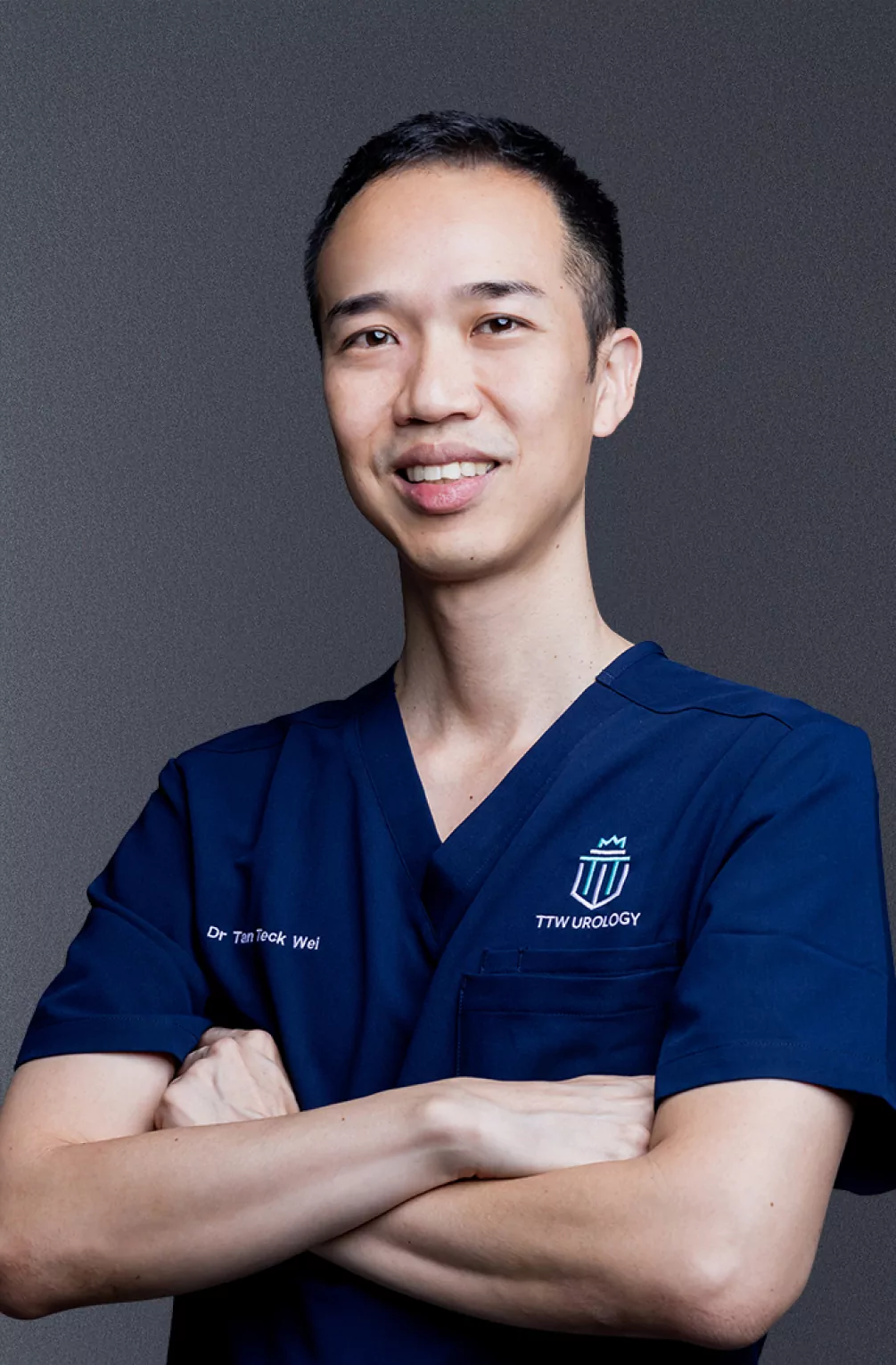
Dr Tan Scrubs Photo

Dr Tan Teck Wei

MBBS (S’pore)

DFD (CAW)

MRCS (Edin)

MMed (Surgery)

FAMS (Urology)

Dr Tan Teck Wei is a Senior Consultant Urologist in Singapore who specialises in the management of complex urological cancers, including those affecting the kidneys, prostate, and bladder.

He is fellowship-trained in open, laparoscopic and robotic surgery. He also specialises in the management of other urological conditions including:

  • Prostate Enlargement
  • Recurrent Urinary Tract Infections
  • Stones

To date, Dr Tan Teck Wei has been involved in more than 500 robot-assisted surgeries, building up his volume of cases from his fellowship training days and cementing his expertise in robotic surgery.

Dr Tan Teck Wei believes in the holistic management of his patients, and seeks to journey with them from diagnosis to cure.  Dr Tan is effectively bilingual in English and Mandarin, making him a popular choice with the young and old, as well as international patients.

Dr Tan Teck Wei possesses a wealth of specialist experience in the field of Urology. He has previously held positions as a Consultant Urologist and Director of Genitourinary Oncology at Tan Tock Seng Hospital.

Dr Tan’s expertise in conducting MRI-targeted Prostate Biopsies led to his advisory role with the Ministry of Health’s Agency for Care Effectiveness. Furthermore, he has served as an Adjunct Assistant Professor and Clinical Teacher at the National University of Singapore (NUS) Yong Loo Lin School of Medicine and the Nanyang Technological University-Imperial College London’s Lee Kong Chian School of Medicine respectively.

He has actively participated in humanitarian initiatives as a member of the Singapore Navy surgical team, collaborating with the Indonesian Navy to provide healthcare services to the communities in Padang and Ambon. It is his passion to improve the standards of healthcare to patients both in Singapore and overseas.

  • Former Consultant Urologist and Director of Genitourinary Oncology, Tan Tock Seng Hospital
  • Adjunct Assistant Professor, National University of Singapore (NUS) Yong Loo Lin School of Medicine
  • Clinical Teacher, Nanyang Technological University-Imperial College London’s Lee Kong Chian School of Medicine
  • Advisor, Ministry of Health’s Agency for Care Effectiveness
  • Surgical Team, Singapore Navy

Ready to Take the Next Step?

If you are considering TURBT or have been diagnosed with a bladder tumour, Dr Tan Teck Wei can help you understand if it is the right choice for your needs. With experience in TURBT procedures, he provides personalised care throughout your journey.

Billing & Insurance

Corporate & Personal Insurance Plans

For Singaporeans, Singapore Permanent Residents and Foreigners.
Please speak to our friendly clinic staff about using your insurance plans.

Make an Enquiry

For urgent or same day appointment requests,
please call our hotline at +65‎ 6518‎ 3622.

    Full Name*

    Email Address*

    Phone Number*

    Your Message*

    For Faster Response, WhatsApp us!

    +65 8090 3075


    ask us anything

    Frequently Asked Questions

    How long does TURBT surgery typically take?

    TURBT usually takes between 30 to 90 minutes, depending on the size, number, and location of tumours. Larger or multiple tumours naturally require more time for complete removal. Dr Tan will provide a more accurate estimate based on your pre-operative findings. 

    Will I need multiple TURBT procedures?

    Some patients may require a second TURBT (re-TURBT) within 2-6 weeks, particularly for high-grade or large tumours. This ensures complete tumour removal and accurate staging. Since bladder tumours can recur, surveillance TURBTs may be necessary if new tumours develop. Dr Tan will discuss the likelihood of repeat procedures based on your pathology results and risk factors.

    How soon will I know if the cancer has been completely removed?

    Initial visual assessment occurs during the procedure, but complete information comes from pathology results, typically available within 7-10 working days. The pathology report reveals crucial details including tumour grade, stage, and whether removal margins are clear. Dr Tan will schedule a follow-up appointment to discuss these results and determine if additional treatment is needed.

    Can TURBT cure bladder cancer?

    For non-muscle invasive bladder cancer, TURBT can be curative when combined with appropriate follow-up care and intravesical therapy if recommended. Success depends on complete tumour removal and the cancer’s biological behaviour. Regular surveillance is essential as bladder cancer has a tendency to recur. Muscle-invasive cancers typically require additional treatment beyond TURBT.

    What are the chances of tumour recurrence after TURBT?

    Recurrence rates vary significantly based on tumour grade, stage, size, and number. Low-grade, small, solitary tumours have lower recurrence rates (15-30%), while high-grade or multiple tumours carry higher risk (50-70%). Intravesical therapy can reduce recurrence risk. Dr Tan will discuss your specific recurrence risk and prevention strategies during follow-up consultation.