Personalised Care for Your Health

Testicular Cancer Treatment & Surgery in Singapore

Testicular cancer is a relatively rare but highly treatable condition, especially if detected early, with cure rates exceeding 95% in most cases. Dr Tan specialises in comprehensive testicular cancer care, offering modern diagnostic techniques and treatment options tailored to each patient’s medical condition. From initial evaluation through treatment and follow-up care, we provide compassionate, evidence-based medical care throughout your journey.

doctor img
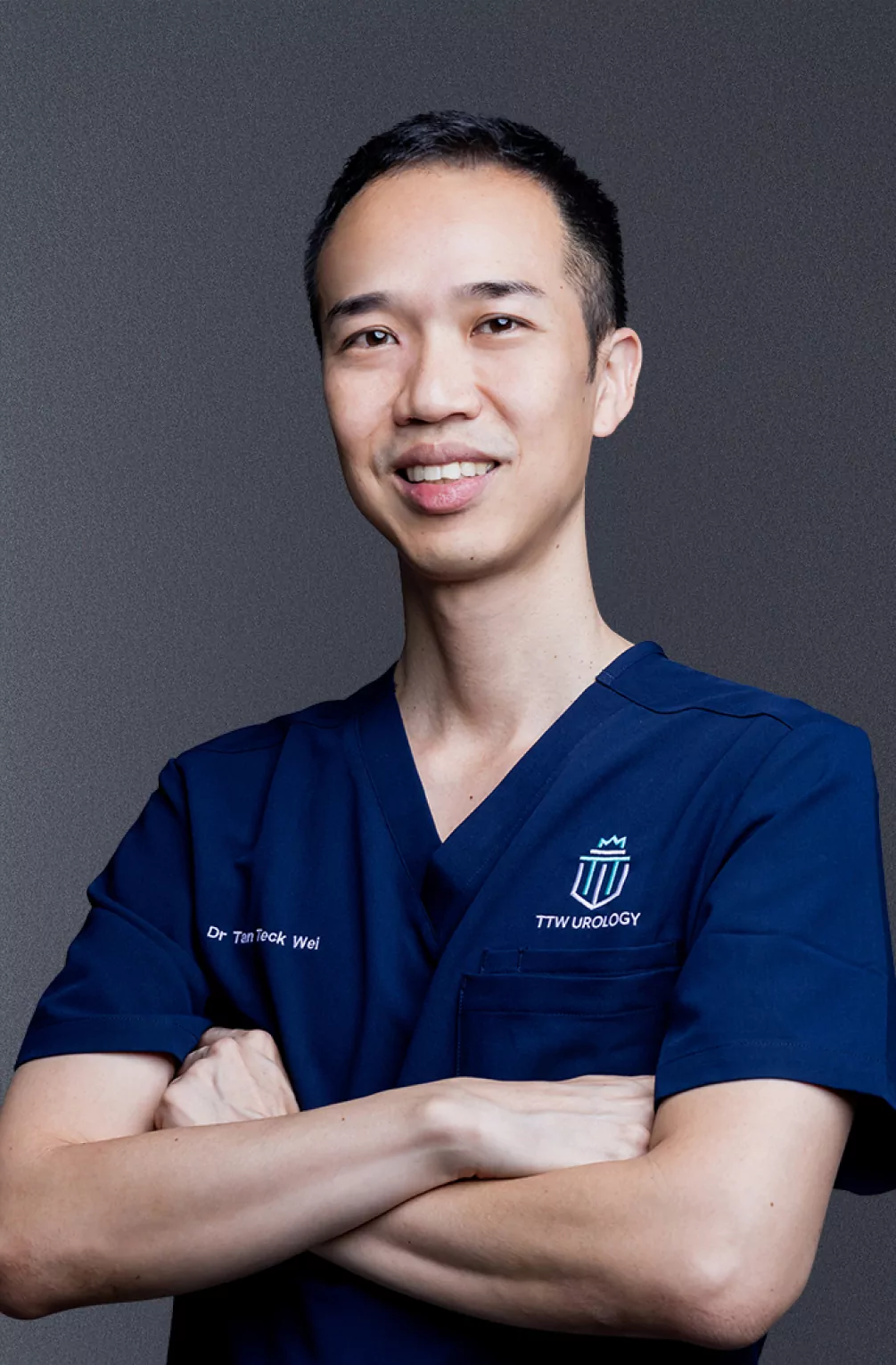
Dr Tan Teck Wei

MBBS|DFD (CAW)|MRCS|MMed (Surgery)|FAMS (Urology)

Testicular Cancer Treatment & Surgery Testicular Cancer Treatment & Surgery in Singapore

What is Testicular Cancer?

Testicular cancer develops when abnormal cells in the testicles grow uncontrollably, forming tumours. The testicles (testes) are the male reproductive organs responsible for producing sperm and testosterone. This cancer primarily affects younger men, with most cases diagnosed between ages 15 and 45, though it can occur at any age.

In Singapore, testicular cancer accounts for approximately 1% of all male cancers, with about 50-60 new cases diagnosed annually. Despite its relative rarity, testicular cancer has one of the highest cure rates among all cancers when treated appropriately, making early detection and proper treatment crucial for positive outcomes.

Types of Testicular Cancer

Germ Cell Tumours (95% of cases)

Germ cell tumours originate from the cells that produce sperm and are divided into two main subtypes:

Seminomas (40-50% of germ cell tumours)

Seminomas typically grow slowly and remain localised to the testicle for longer periods. They occur most commonly in men between 30-40 years old and respond well to both radiation therapy and chemotherapy.

Non-seminomas (50-60% of germ cell tumours)

Non-seminomas comprise several subtypes including embryonal carcinoma, yolk sac tumours, choriocarcinoma, and teratomas. These tumours tend to grow more rapidly than seminomas and often occur in men in their 20s and early 30s. They may contain multiple cell types and have different treatment considerations compared to seminomas.

Non-Germ Cell Tumours (5% of cases)

These rare tumours include Leydig cell tumours and Sertoli cell tumours, which arise from the supportive tissues of the testicle. Most are benign, but some can be malignant and require surgical removal.

Causes & Risk Factors of Testicular Cancer

Causes

The exact cause of testicular cancer remains unknown, though research suggests genetic mutations in germ cells lead to uncontrolled growth. These mutations may be influenced by various factors during foetal development or later in life.

Risk Factors

  • Undescended testicle (cryptorchidism): Increases risk by 3–8 times, even if corrected surgically.
  • Family history: Having a father or brother with testicular cancer raises risk significantly (up to 8–10 fold).
  • Personal history: Previous testicular cancer in one testicle increases risk in the other.
  • Klinefelter syndrome: This genetic disorder affecting male development is linked to increased risk.
  • Age: Most common in males aged 15 to 45 years.

Signs & Symptoms of Testicular Cancer

Early Symptoms
  • Painless lump or swelling in one testicle (most common sign)
  • Feeling of heaviness in the scrotum
  • Change in testicle size or firmness
  • Dull ache in the lower abdomen or groin
  • Sudden collection of fluid in the scrotum
Advanced Symptoms
  • Back pain (indicating spread to retroperitoneal lymph nodes)
  • Shortness of breath or cough (lung involvement)
  • Breast tenderness or growth (hormonal effects)
  • Headaches or confusion (brain metastases)
  • Abdominal mass or bloating
Acute Presentation
  • Sudden severe testicular pain (if tumour bleeding occurs)
  • Rapid testicular enlargement
  • Scrotal redness or warmth

Experiencing these symptoms?
Do not wait for them to worsen

Schedule a consultation with Dr Tan Teck Wei for an accurate diagnosis and personalised treatment plan.

When to See a Urologist


Immediate medical attention is essential if you notice any lump, swelling, or change in your testicles. Red flag symptoms requiring urgent evaluation include sudden severe testicular pain, rapid testicular enlargement, or constitutional symptoms like unexplained weight loss, persistent fatigue, or breathing difficulties.

Early consultation is crucial because testicular cancer tends to spread in a predictable pattern, typically first to the retroperitoneal lymph nodes, followed by the lungs and other organs. The earlier treatment is initiated, the more straightforward and effective it is likely to be. During your first consultation, your urologist will perform a thorough physical examination, review your medical history, and order appropriate tests. Many men delay seeking help due to embarrassment or fear, but early detection dramatically improves outcomes and often allows for less extensive treatment.

Diagnostic Investigations

  • Clinical Examination

    Physical examination is typically the first step when testicular cancer is suspected. It involves assessing testicular size, consistency, and the presence of any palpable masses.

  • Ultrasound Imaging

    Scrotal ultrasound is the primary imaging modality, providing detailed visualisation of testicular structure. This painless test can accurately evaluate any lumps or swelling and helps differentiate between benign and malignant lesions. It typically takes 15 to 20 minutes.

  • Blood Tumour Markers

    Specific blood tests measure tumour markers including AFP (alpha-fetoprotein), beta-hCG (human chorionic gonadotropin), and LDH (lactate dehydrogenase). These markers help diagnose cancer type, assess disease extent, and monitor treatment response. Results are usually available within 24-48 hours.

  • CT Scan

    A computed tomography (CT) scan of the abdomen and chest is commonly performed to evaluate whether cancer has spread to the lymph nodes, lungs, or other organs. This staging investigation is essential for treatment planning and may require contrast injection for optimal imaging.

Testicular Cancer Treatment Options

Radical Inguinal Orchiectomy

The first line of treatment for both seminomas and non-seminomas involves surgical removal of the affected testicle through a groin incision (radical inguinal orchiectomy). This procedure is performed under general anaesthesia and typically takes about one hour. It is done through the groin rather than the scrotum to minimise the risk of spreading cancer cells. The surgeon removes the entire testicle and spermatic cord. This not only treats the primary tumour but also allows for histological confirmation of the diagnosis. Most patients can return home the same day or after an overnight stay. A prosthetic testicle may be placed during the same surgery if desired.

Surveillance (Active Monitoring)

For some early stage (Stage I) testicular cancers, particularly seminomas, careful surveillance after orchiectomy may be appropriate, avoiding chemotherapy or radiotherapy. This approach involves regular physical examinations, blood tests for tumour markers every few months initially, and periodic CT scans. Surveillance avoids overtreatment in patients with a low risk of recurrence but requires strict adherence to follow-up schedules.

Chemotherapy

Chemotherapy is used when there is a higher risk of spread or recurrence, especially in non-seminomas or advanced seminomas. It involves anti-cancer drugs that destroy cancer cells throughout the body. Standard regimens include BEP (bleomycin, etoposide, cisplatin) or EP (etoposide, cisplatin), administered in cycles over 9 to 12 weeks. Chemotherapy may be given after surgery as adjuvant treatment or used as the primary therapy for metastatic disease. It is administered intravenously in an outpatient setting. Most patients respond very well, though temporary side effects such as nausea, hair loss, and fatigue are common.

Radiation Therapy

Radiation therapy uses high-energy beams to destroy cancer cells and is particularly effective for seminomas. Treatment involves daily sessions over 2-3 weeks, targeting the retroperitoneal lymph nodes. Current techniques minimise radiation exposure to surrounding tissues. Side effects are generally mild and include temporary fatigue and mild gastrointestinal symptoms.

Retroperitoneal Lymph Node Dissection (RPLND)

This specialised surgery removes lymph nodes from the back part of the abdomen where testicular cancer commonly spreads. The procedure may be performed using open or minimally invasive techniques. RPLND serves both diagnostic and therapeutic purposes, particularly for non-seminomas with residual masses after chemotherapy. Nerve-sparing techniques help preserve normal ejaculation when possible.

Every patient’s condition is unique

Dr Tan Teck Wei will assess your medical condition and recommend the most suitable treatment approach for you.

Complications If Left Untreated

Untreated testicular cancer invariably progresses, spreading first to retroperitoneal lymph nodes, then to lungs, liver, brain, and bones. Local progression causes testicular destruction, chronic pain, and potential rupture through the scrotal skin. Metastatic disease leads to respiratory failure from lung involvement, neurological symptoms from brain metastases, and bone pain from skeletal spread.

Advanced cancer causes constitutional symptoms including severe weight loss, debilitating fatigue, and eventual organ failure. Some testicular cancers produce hormones causing feminising effects like breast development and decreased libido. Delayed treatment transforms a highly curable cancer into a life-threatening condition. While early-stage testicular cancer has cure rates exceeding 95%, advanced metastatic disease becomes increasingly difficult to treat, emphasising the critical importance of early detection and prompt treatment.

Dr Tan Scrubs Photo

Dr Tan Teck Wei

MBBS (S’pore)

DFD (CAW)

MRCS (Edin)

MMed (Surgery)

FAMS (Urology)

Dr Tan Teck Wei is a Senior Consultant Urologist in Singapore who specialises in the management of complex urological cancers, including those affecting the kidneys, prostate, and bladder.

He is fellowship-trained in open, laparoscopic and robotic surgery. He also specialises in the management of other urological conditions including:

  • Prostate Enlargement
  • Recurrent Urinary Tract Infections
  • Stones

To date, Dr Tan Teck Wei has been involved in more than 500 robot-assisted surgeries, building up his volume of cases from his fellowship training days and cementing his expertise in robotic surgery.

Dr Tan Teck Wei believes in the holistic management of his patients, and seeks to journey with them from diagnosis to cure.  Dr Tan is effectively bilingual in English and Mandarin, making him a popular choice with the young and old, as well as international patients.

Dr Tan Teck Wei possesses a wealth of specialist experience in the field of Urology. He has previously held positions as a Consultant Urologist and Director of Genitourinary Oncology at Tan Tock Seng Hospital.

Dr Tan’s expertise in conducting MRI-targeted Prostate Biopsies led to his advisory role with the Ministry of Health’s Agency for Care Effectiveness. Furthermore, he has served as an Adjunct Assistant Professor and Clinical Teacher at the National University of Singapore (NUS) Yong Loo Lin School of Medicine and the Nanyang Technological University-Imperial College London’s Lee Kong Chian School of Medicine respectively.

He has actively participated in humanitarian initiatives as a member of the Singapore Navy surgical team, collaborating with the Indonesian Navy to provide healthcare services to the communities in Padang and Ambon. It is his passion to improve the standards of healthcare to patients both in Singapore and overseas.

  • Former Consultant Urologist and Director of Genitourinary Oncology, Tan Tock Seng Hospital
  • Adjunct Assistant Professor, National University of Singapore (NUS) Yong Loo Lin School of Medicine
  • Clinical Teacher, Nanyang Technological University-Imperial College London’s Lee Kong Chian School of Medicine
  • Advisor, Ministry of Health’s Agency for Care Effectiveness
  • Surgical Team, Singapore Navy

Take the First Step
Towards Better Health

Living with testicular cancer can be challenging, but you do not have to face it alone. Dr Tan Teck Wei has years of experience diagnosing and treating testicular cancer using the current evidence-based approaches.

Billing & Insurance

Corporate & Personal Insurance Plans

For Singaporeans, Singapore Permanent Residents and Foreigners.
Please speak to our friendly clinic staff about using your insurance plans.

Make an Enquiry

For urgent or same day appointment requests,
please call our hotline at +65‎ 6518‎ 3622.

    Full Name*

    Email Address*

    Phone Number*

    Your Message*

    For Faster Response, WhatsApp us!

    +65 8090 3075


    Frequently Asked Questions

    Will testicular cancer treatment affect my fertility?

    Fertility concerns are common and valid. While removing one testicle does not usually affect fertility if the remaining testicle is healthy, chemotherapy and radiation can temporarily or permanently impact sperm production. We strongly recommend sperm banking before starting treatment for all men who wish to preserve fertility options. Most men maintain normal testosterone production with one testicle, though some may require hormone replacement therapy.

    What are the chances of testicular cancer returning after treatment?

    Recurrence rates depend on initial cancer stage and type. Stage I seminomas have recurrence rates below 5% with appropriate treatment, while non-seminomas may have higher rates of recurrence. Most recurrences happen within the first two years, which is why close follow-up is essential. Even if cancer returns, salvage treatments remain highly effective. Regular monitoring helps detect any recurrence early when it is most treatable.

    How long will I need to be monitored after treatment?

    Follow-up schedules vary based on cancer type and stage. Generally, surveillance includes visits every few months for the first few years, gradually decreasing to annual check-ups after five years. Each visit typically involves physical examination, blood tests for tumour markers, and periodic imaging. While the frequent appointments may seem burdensome, this careful monitoring ensures any recurrence is caught early and contributes to good cure rates.

    Can I still have a normal sex life after testicular cancer treatment?

    Most men maintain normal sexual function after testicular cancer treatment. Removing one testicle does not typically affect hormone production or the ability to achieve erection. Psychological impacts are common and normal – many men benefit from counselling to address body image concerns and anxiety about sexual performance.

    What is the survival rate for testicular cancer in Singapore?

    Testicular cancer has among the highest cure rates of all cancers. Overall five-year survival rates exceed 95%, with localised disease approaching 99% cure rates. Even advanced testicular cancer with distant metastases maintains survival rates above 70% with appropriate treatment. These positive outcomes reflect both the cancer’s inherent treatment responsiveness and advances in surgical and medical therapies.

    Should my family members be screened for testicular cancer?

    Men with first-degree relatives (father, brothers) with testicular cancer have increased risk and should perform regular self-examinations starting in their teens. Sons of testicular cancer survivors do not require special screening beyond regular self-examination unless other risk factors exist. Genetic counselling may be appropriate for families with multiple affected members to assess hereditary cancer syndromes.