Personalised Care for Your Health

Penile Cancer Treatment & Surgery in Singapore

Penile cancer is a rare but serious condition, affecting approximately 1 in 100,000 men in Singapore each year. Early diagnosis and timely treatment are critical to improving outcomes. Dr Tan specialises in diagnosing and treating penile cancer using evidence-based approaches, providing compassionate care throughout your treatment journey.

doctor img
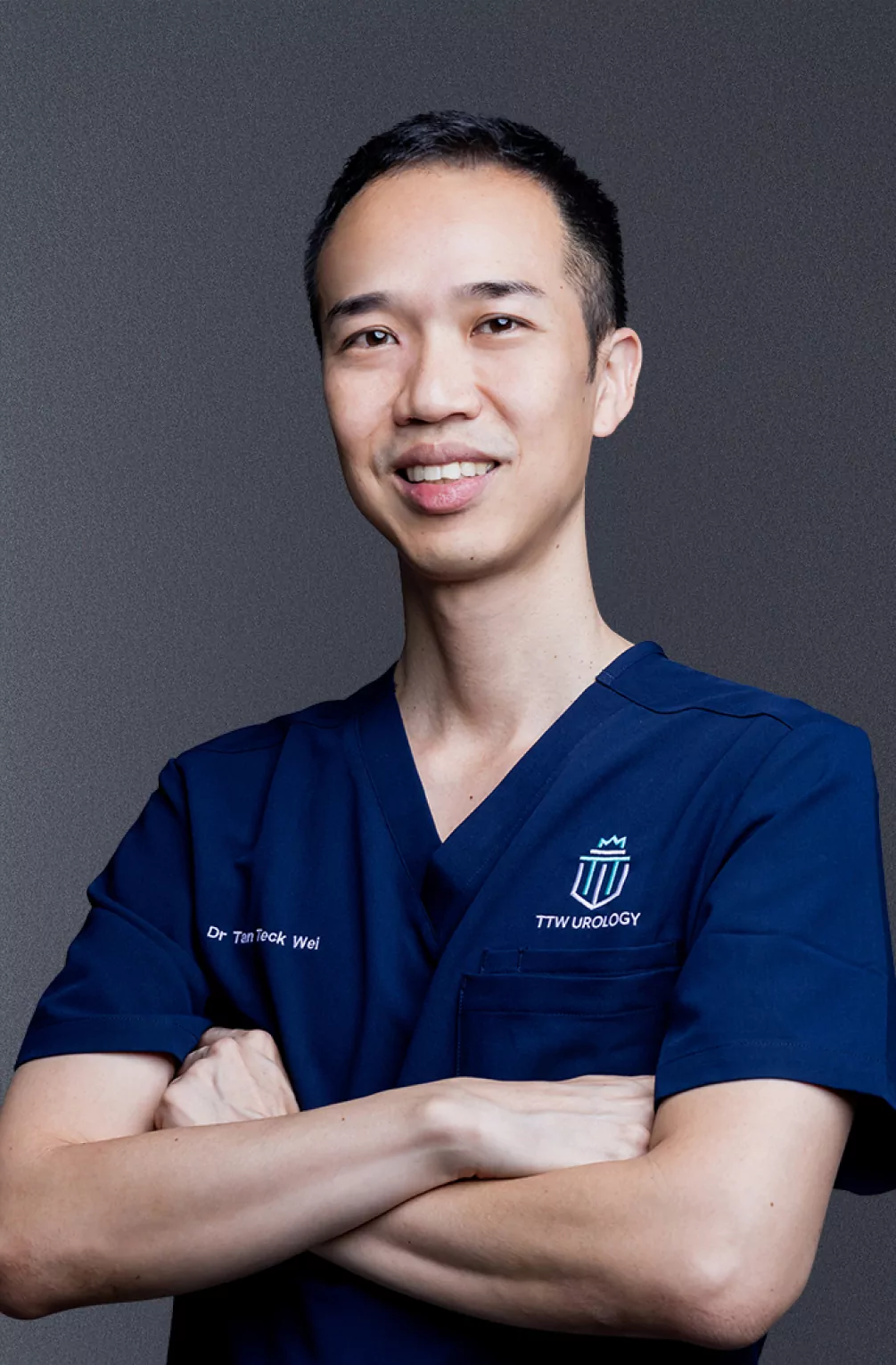
Dr Tan Teck Wei

MBBS|DFD (CAW)|MRCS|MMed (Surgery)|FAMS (Urology)

Penile cancer treatment surgery Penile Cancer Treatment & Surgery in Singapore

What is Penile Cancer?

Penile cancer is a malignant growth that develops in the tissues of the penis, most commonly beginning in the skin cells. The cancer typically starts on the glans (head of the penis) or foreskin in uncircumcised men, though it can occur anywhere on the penile shaft.

In Singapore and Southeast Asia, penile cancer accounts for less than 1% of all male cancers, making it relatively rare but requiring specialised expertise for optimal management. The condition primarily affects men over 50, though younger men can also develop this cancer.

Types of Penile Cancer

Squamous Cell Carcinoma

This accounts for approximately 95% of all penile cancers. It originates in the flat skin cells covering the penis and can appear as a growth, ulcer, or colour change on the penile skin.

Melanoma

A rare but aggressive form that develops from melanocytes, the cells that produce skin pigment. This type typically appears as a dark-coloured growth or spot on the penis.

Basal Cell Carcinoma

An extremely rare form of penile cancer that grows slowly and rarely spreads to other parts of the body. It typically appears as a small, raised bump on the penile skin.

Sarcoma

These rare cancers develop in the blood vessels, smooth muscle, or connective tissues of the penis. They tend to grow deeper within penile structures rather than on the surface.

Causes & Risk Factors of Penile Cancer

Causes

The exact cause of penile cancer remains unclear, but several factors contribute to abnormal cell growth:

  • Human papillomavirus (HPV) infection, particularly high-risk strains
  • Chronic inflammation from poor hygiene or recurrent infections
  • Exposure to ultraviolet (UV) light treatment for psoriasis
  • Tobacco use, which can damage cellular DNA and promote cancer development

Risk Factors

  • Being uncircumcised, especially in cases of phimosis that prevent proper cleaning
  • Age over 50 years
  • Multiple sexual partners, increasing exposure to high-risk HPV strains
  • Weakened immune system, such as in HIV infection or use of immunosuppressive medications
  • History of psoriasis treatment with psoralen and UV light (PUVA therapy)
  • Poor genital hygiene practices
  • Chronic balanitis, or long-term inflammation of the glans penis

Signs & Symptoms of Penile Cancer

Early Symptoms
  • Small, painless lump or sore on the penis
  • Changes in skin colour or texture
  • Flat, bluish-brown growth on the glans or foreskin
  • Persistent redness or irritation
  • Small, crusty bumps
  • Unusual discharge or bleeding under the foreskin
Advanced Symptoms
  • Larger growth or ulcer that bleeds easily
  • Foul-smelling discharge from under the foreskin
  • Significant changes in penile appearance
  • Swelling of the penis
  • Lumps in the groin area (enlarged lymph nodes)
  • Difficulty retracting the foreskin
  • Pain during urination
Late Stage Symptoms
  • Weight loss and fatigue
  • Bone pain (if cancer has spread)
  • Difficulty urinating or blood in urine
  • Severe penile pain
  • Large fungating (mushroom-like) growths
  • Multiple enlarged lymph nodes

Experiencing these symptoms?
Do not wait for them to worsen

Schedule a consultation with Dr Tan Teck Wei for an accurate diagnosis and personalised treatment plan.

When to See a Urologist


Seek immediate medical attention if you notice any persistent changes to your penis lasting more than four weeks. Red flag symptoms requiring urgent evaluation include visible growths or sores on the penis, unexplained bleeding or discharge, difficulty retracting the foreskin when previously able, and enlarged lymph nodes in the groin area.

During your first consultation, your urologist will conduct a thorough physical examination, discuss your medical history, and may perform initial tests. Early diagnosis significantly improves treatment outcomes and may allow for less invasive treatment options.

Diagnostic Investigations

Accurate diagnosis of penile cancer requires several investigations.

  • Physical Examination

    Visual and physical assessment of the lesion is the first step, where Dr Tan carefully inspects the penis and surrounding areas, palpating for abnormalities and checking the groin for enlarged lymph nodes.

  • Biopsy

    Biopsy of the penile lesion remains the definitive diagnostic test. Under local or general anaesthesia, a small tissue sample is removed for laboratory analysis. Results typically return within 5 to 7 days, confirming whether cancer is present and identifying the specific type.

  • Imaging Tests

    Imaging tests may be used to assess tumour extent and possible spread. An MRI scan provides high-resolution images of soft tissues to evaluate local invasion, while CT scans or PET-CT scans may be used to detect spread to distant organs.

Penile Cancer Treatment Options

Treatment for penile cancer depends on the cancer’s stage, location, and size, with options ranging from topical therapies to surgical intervention.

Non-Surgical Treatments
Topical Chemotherapy

For very early-stage cancers (carcinoma in situ), chemotherapy creams containing 5-fluorouracil or imiquimod may be applied directly to affected areas. Treatment typically continues for several weeks with regular monitoring to assess response.

Cryotherapy

Liquid nitrogen freezes and destroys cancer cells in very small, early-stage tumours. Multiple sessions may be needed, with healing occurring over several weeks.

Laser Therapy

Laser therapy uses high-energy light to precisely remove or destroy superficial cancerous tissue while preserving surrounding healthy structures. This approach is suitable for small, localised tumours.

Radiation Therapy

External beam radiation can treat early-stage cancers while preserving penile structure. Daily treatments over a few weeks target cancer cells while minimising damage to surrounding tissues.

Chemotherapy

Systemic chemotherapy is recommended when cancer has spread to lymph nodes or distant organs, or when it has recurred after prior treatments. Treatment is administered intravenously.

Surgical Treatments
Circumcision

Performed when cancer is confined to the foreskin. This may be curative in very early-stage cases and helps preserve penile function.

Wide Local Excision

Removes the tumour along with a surrounding margin of healthy tissue to reduce recurrence risk. This organ-preserving approach aims to maintain penile appearance and function.

Glans Resurfacing or Partial Penectomy

Used when the tumour affects the glans or shaft but organ preservation is still possible. These procedures aim to retain urinary and sexual function while ensuring complete cancer removal.

Total Penectomy

Required for advanced cases where the tumour has deeply invaded the penile tissues. As the entire penis is removed, a perineal urethrostomy (which is a urethral opening that is created in the perineum) has to be created for urination.

Lymph Node Dissection

Penile cancer commonly spreads to the inguinal lymph nodes. If lymph node involvement is suspected, removal is recommended.

This can be performed at the same time as the primary tumour surgery or later. Dissection helps determine cancer stage and guide further treatment. Open or minimally invasive techniques may be used.

Every patient’s condition is unique

Dr Tan Teck Wei will assess your medical condition and recommend the most suitable treatment approach for you.

Complications If Left Untreated

Untreated penile cancer progressively worsens, potentially spreading throughout the penis and beyond. Local progression can cause severe pain, bleeding, and infection, eventually making urination difficult or impossible. The cancer commonly spreads first to nearby lymph nodes in the groin, causing swelling and discomfort.

Without treatment, metastasis to distant organs like lungs, liver, or bones becomes likely. This advancement significantly reduces treatment options and survival rates. Fungating tumours may develop, creating large, malodorous growths that severely impact quality of life. Some men develop urethral obstruction requiring emergency intervention.

Psychological effects of untreated penile cancer include severe depression, anxiety, and relationship difficulties. Early treatment prevents these complications while preserving maximum penile function and appearance.

Prevention of Penile Cancer

While not all penile cancers are preventable, several strategies significantly reduce risk.

HPV vaccination in younger males helps prevent infection with high-risk strains linked to penile cancer. Practising safe sex and limiting sexual partners reduces HPV exposure. Good genital hygiene, including daily cleaning under the foreskin, prevents chronic inflammation.

Circumcision in infancy or childhood appears protective, though adult circumcision for cancer prevention remains controversial. Avoiding tobacco in all forms reduces cancer risk. Men with phimosis should seek treatment to enable proper hygiene.

Regular self-examination helps detect changes early. Any persistent abnormalities warrant medical evaluation.

Dr Tan Scrubs Photo

Dr Tan Teck Wei

MBBS (S’pore)

DFD (CAW)

MRCS (Edin)

MMed (Surgery)

FAMS (Urology)

Dr Tan Teck Wei is a Senior Consultant Urologist in Singapore who specialises in the management of complex urological cancers, including those affecting the kidneys, prostate, and bladder.

He is fellowship-trained in open, laparoscopic and robotic surgery. He also specialises in the management of other urological conditions including:

  • Prostate Enlargement
  • Recurrent Urinary Tract Infections
  • Stones

To date, Dr Tan Teck Wei has been involved in more than 500 robot-assisted surgeries, building up his volume of cases from his fellowship training days and cementing his expertise in robotic surgery.

Dr Tan Teck Wei believes in the holistic management of his patients, and seeks to journey with them from diagnosis to cure.  Dr Tan is effectively bilingual in English and Mandarin, making him a popular choice with the young and old, as well as international patients.

Dr Tan Teck Wei possesses a wealth of specialist experience in the field of Urology. He has previously held positions as a Consultant Urologist and Director of Genitourinary Oncology at Tan Tock Seng Hospital.

Dr Tan’s expertise in conducting MRI-targeted Prostate Biopsies led to his advisory role with the Ministry of Health’s Agency for Care Effectiveness. Furthermore, he has served as an Adjunct Assistant Professor and Clinical Teacher at the National University of Singapore (NUS) Yong Loo Lin School of Medicine and the Nanyang Technological University-Imperial College London’s Lee Kong Chian School of Medicine respectively.

He has actively participated in humanitarian initiatives as a member of the Singapore Navy surgical team, collaborating with the Indonesian Navy to provide healthcare services to the communities in Padang and Ambon. It is his passion to improve the standards of healthcare to patients both in Singapore and overseas.

  • Former Consultant Urologist and Director of Genitourinary Oncology, Tan Tock Seng Hospital
  • Adjunct Assistant Professor, National University of Singapore (NUS) Yong Loo Lin School of Medicine
  • Clinical Teacher, Nanyang Technological University-Imperial College London’s Lee Kong Chian School of Medicine
  • Advisor, Ministry of Health’s Agency for Care Effectiveness
  • Surgical Team, Singapore Navy

Take the First Step
Towards Better Health

Living with penile cancer concerns can be challenging, but you do not have to face it alone. Dr Tan Teck Wei is experienced in diagnosing and treating penile cancer using evidence-based approaches.

Billing & Insurance

Corporate & Personal Insurance Plans

For Singaporeans, Singapore Permanent Residents and Foreigners.
Please speak to our friendly clinic staff about using your insurance plans.

Make an Enquiry

For urgent or same day appointment requests,
please call our hotline at +65‎ 6518‎ 3622.

    Full Name*

    Email Address*

    Phone Number*

    Your Message*

    For Faster Response, WhatsApp us!

    +65 8090 3075


    Frequently Asked Questions

    What is the survival rate for penile cancer?

    Survival rates depend primarily on the stage at diagnosis. When detected early and confined to the penis, five-year survival rates exceed 80%. For cancers that have spread to nearby lymph nodes, rates range from 50-80% depending on the extent. Advanced metastatic disease has lower survival rates, emphasising the importance of early detection and treatment. Each case is unique, and Dr Tan can provide more specific information based on your individual circumstances.

    Will penile cancer treatment affect my ability to have sexual intercourse?

    Treatment impact on sexual function varies by procedure. Many organ-preserving treatments like laser therapy, topical treatments, or limited excisions maintain normal sexual function. Partial penectomy may allow continued sexual activity, though sensation and mechanics may change. Even after more extensive surgery, various options exist for maintaining intimacy. Dr Tan will discuss functional outcomes and rehabilitation options specific to your treatment plan.

    How often does penile cancer recur after treatment?

    The risk of recurrence depends on initial cancer stage and treatment type. Early-stage cancers treated with organ-preserving methods have recurrence rates of 10-30%, usually manageable with additional treatment. More advanced cancers have higher recurrence risks. Regular surveillance every 3-6 months for the first two years, then annually, helps detect any recurrence early when most treatable.

    What is the typical recovery time after penile cancer surgery?

    Recovery time varies according to the extent of your procedure. Minor procedures like circumcision or local excision typically heal within 4-6 weeks. Partial penectomy may require 6-8 weeks for complete healing, with most men resuming normal activities within 2-3 weeks. More extensive surgeries require longer recovery, potentially 2-3 months. Dr Tan will provide specific recovery guidelines including wound care, activity restrictions, and follow-up schedules.

    Can penile cancer be detected through blood tests?

    Currently, no specific blood tests detect penile cancer. Diagnosis relies on physical examination, biopsy, and imaging studies. Blood tests may be ordered to assess overall health before treatment or check for markers suggesting metastatic spread, but they cannot diagnose penile cancer itself. Regular self-examination and medical check-ups remain the most effective detection methods.